OUR STORY
History and Milestones
From a federal polytechnic serving the technical needs of Kano State to a federal university of science and technology with a national mandate.
Origins in Kabo
The story of this University begins with a decision taken decades ago that technical education should not be concentrated only in Nigeria's largest cities. Kabo, a Local Government Area in Kano State with a long agricultural and commercial tradition, was selected as the site of a federal technical institution — a choice that brought higher education within reach of thousands of young people in the surrounding communities who would otherwise have had to travel far from home, or not travel at all.
As Federal Polytechnic Kabo, the institution built its reputation on the practical disciplines: engineering technology, science laboratory technology, computer studies, business and management. It produced technicians, technologists and supervisors who went into the workshops, laboratories, banks, hospitals and construction sites of Kano State and far beyond. Its National Diploma and Higher National Diploma graduates were known for one thing above all — they could do the work.
By the 2020s, however, the limits of that mandate had become clear. Employers increasingly demanded degrees. Graduates seeking postgraduate study faced the well-documented obstacles that HND holders encounter in the Nigerian system. And the North-West, the most populous geopolitical zone in the country, remained substantially underserved by federal universities relative to its share of the national population and its share of UTME candidates.
The upgrade of Federal Polytechnic Kabo to the Federal University of Science and Technology, Kabo answered all three problems at once. It preserved a functioning institution with staff, students, land and buildings; it removed the ceiling on what its graduates could achieve; and it added a federal university to a zone that needed one. Crucially, it did so without abandoning the technical character that had made the polytechnic valuable in the first place.
Milestones
-
1991
Federal Polytechnic Kabo Established
The Federal Government establishes a polytechnic at Kabo, Kano State, to expand access to technical and vocational education in the North-West and to supply technicians and technologists to a growing industrial base.
-
1993
First Students Admitted
The pioneer cohort is admitted into National Diploma programmes in engineering technology, science laboratory technology and business studies, taught in the first permanent teaching blocks on the Kabo site.
-
1998
Higher National Diploma Programmes Begin
Following successful National Board for Technical Education accreditation, the polytechnic introduces HND programmes, retaining its best ND graduates for advanced technical training.
-
2005
Campus Expansion
A decade of steady growth adds engineering workshops, science laboratories, a library block, additional lecture theatres and the first purpose-built halls of residence.
-
2012
TETFund Intervention Projects
Tertiary Education Trust Fund interventions deliver new laboratory equipment, ICT infrastructure and staff training fellowships, substantially raising the institution's teaching capacity.
-
2019
Case for Upgrade Advanced
Stakeholders from Kano State, alumni associations and the National Assembly begin formal advocacy for the polytechnic's conversion to a federal university of technology, citing regional access and graduate progression.
-
2023
Establishment Bill Passed
A Bill for an Act to establish the Federal University of Science and Technology, Kabo passes both chambers of the National Assembly and receives presidential assent, formally converting the polytechnic into a federal university.
-
2024
Pioneer Governing Council and Vice-Chancellor
The Visitor inaugurates the pioneer Governing Council; Prof. Muhammad Sanusi Magaji is appointed pioneer Vice-Chancellor. Principal Officers are appointed and the Senate is constituted.
-
2024
NUC Resource Verification
The National Universities Commission conducts resource verification of the University's pioneer programmes, clearing the first tranche of undergraduate degrees for admission.
-
2025
Pioneer Degree Cohort Matriculates
The first undergraduate students are admitted through JAMB UTME and Direct Entry, and are formally matriculated at the University's inaugural matriculation ceremony.
-
2026
Faculty Expansion and Capital Works
Additional faculties in the health and computing sciences commence academic activity as the phased capital development programme delivers new faculty buildings, laboratories and the central library complex.
1991
Founded
As Federal Polytechnic Kabo
2023
University Status
By Act of the National Assembly
10
Faculties Today
Science, technology and health
20,000+
Alumni
ND, HND and degree holders
What We Kept, and Why
Institutional upgrades often discard the past. This one did not. When Senate designed the University's pioneer curricula, it began from a deliberate question: which features of the polytechnic tradition should survive into degree-level teaching? The answer shaped everything that followed.
Workshop and laboratory hours were protected rather than reduced. Industrial attachment through SIWES was made compulsory in every programme where it is professionally meaningful. Assessment retained a substantial practical component, so that a student cannot pass a technical course on written work alone. And the technologists and instructors who had trained thousands of diploma students were retained and supported into further qualification, rather than being written off as unsuited to a university.
The result is a university with an unusual character for Nigeria: degree-awarding, research-active and NUC-regulated, but with the hands-on instincts of a technical institution running through it.
- Protected workshop, studio and laboratory contact hours
- Compulsory SIWES industrial attachment across technical programmes
- Practical components carried into formal degree assessment
- Retention and further training of experienced technologists and instructors
- Continuity of the campus estate, staff quarters and student residences
The Institution Today
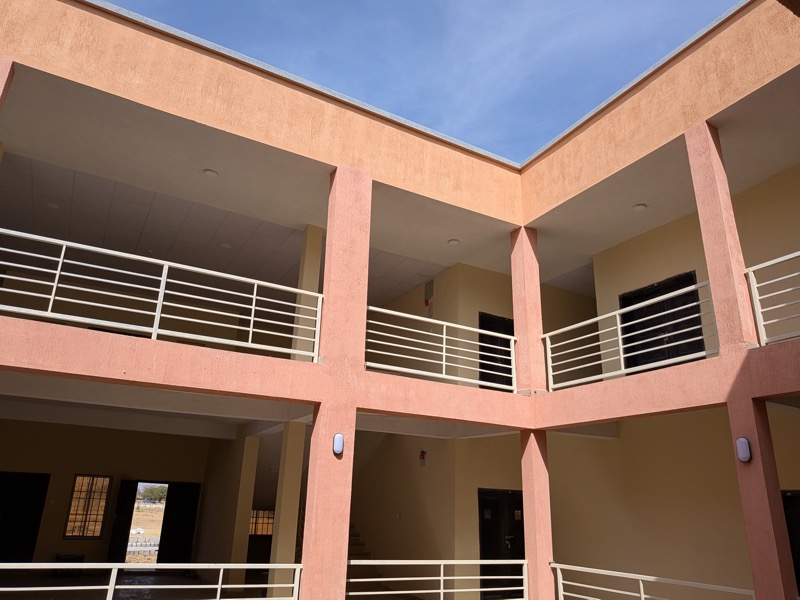
FUSTKABO today operates ten faculties spanning computing, engineering, environmental sciences, basic medical sciences, clinical sciences, allied health sciences, nursing, pharmaceutical sciences, management sciences and pure science. Its undergraduate portfolio includes both four-year B.Sc and B.Eng degrees and longer professional programmes — MBBS, Pharm.D, B.NSc, BMLS, DPT and OD among them — each subject to the accreditation requirements of its statutory regulatory council in addition to those of the NUC.
Expansion is deliberately paced. The University's policy is that no programme opens for admission until its academic staffing, laboratory provision and physical space have been verified as adequate. That approach produces slower growth in student numbers than some comparable institutions have pursued, and the University regards that as the correct trade-off: an accredited degree awarded to a well-taught student is worth more than a large enrolment figure.
Alongside teaching, the University is building its research base. A University Research Grant scheme, an institutional repository, faculty research clusters and partnerships with hospitals, utilities and industry are all in development, with a stated focus on the problems of northern Nigeria: energy access, water, agricultural processing, maternal and child health, and the digitalisation of public services.
For Former Students of Federal Polytechnic Kabo
All National Diploma and Higher National Diploma certificates awarded by Federal Polytechnic Kabo remain fully valid, and the University maintains the academic records of the polytechnic era. Requests for transcripts, certified true copies and verification of results should be directed to the Registry, quoting your matriculation number, programme and year of graduation. Former students are also warmly invited to register with the Alumni Association, which now covers both the polytechnic and university eras.
Be Part of the Next Chapter
The University is still being built — by its staff, its students and its alumni. There is room in that work for you.